
Contaminated Soil Transportation in New Jersey
Project review and transportation coordination for contaminated or potentially contaminated soil. Share the project town, quantity, available reports, and material concerns so the Core Transport team can review the logistics and receiving options for your project.
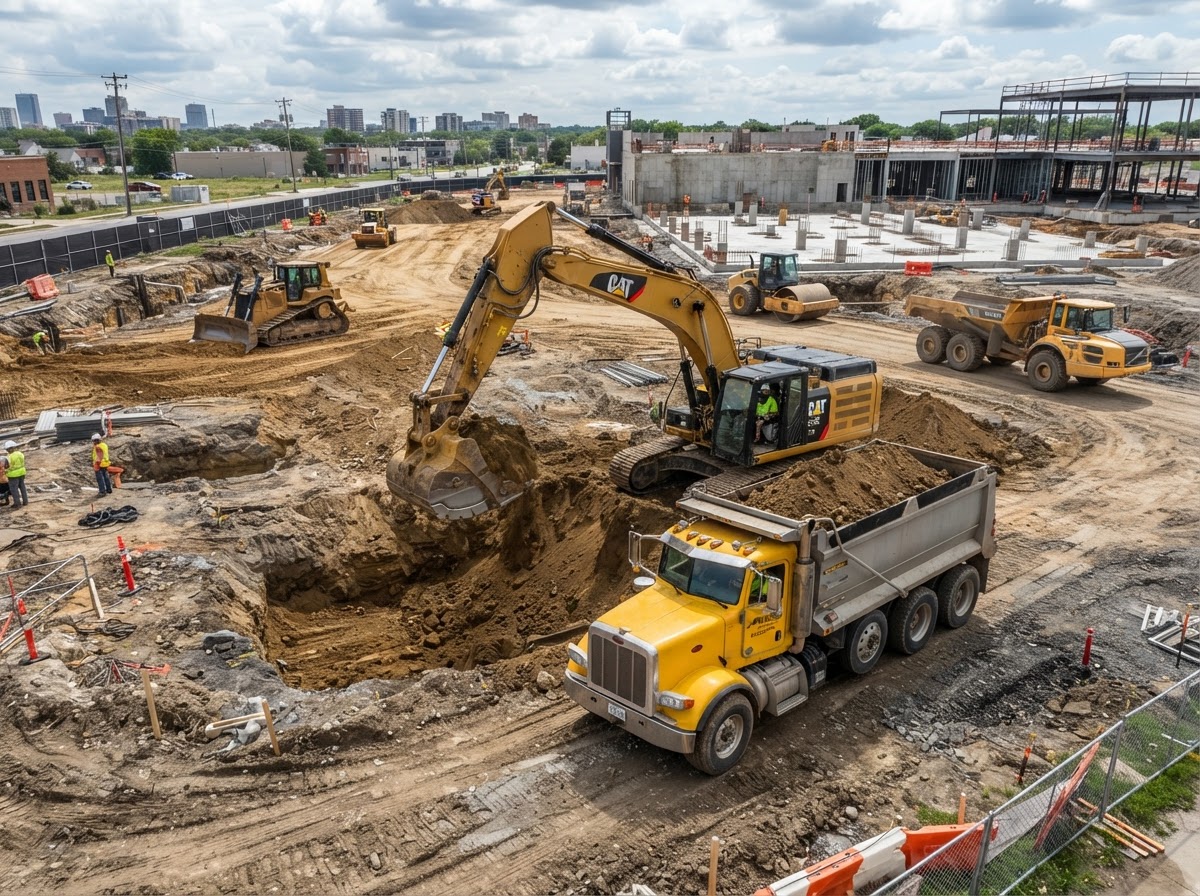
Illustrative commercial site excavation and soil export coordination
What helps us review a contaminated soil inquiry
Having these details ready helps the team assess the logistics. You do not need to diagnose the material classification yourself — describe what you know and the team will work through the rest with you.
- Project town or ZIP code
- Estimated quantity and units — tons or cubic yards
- Available sampling reports or material documentation, if any
- Known material concerns — without needing to diagnose the classification yourself
- Loading equipment and site access conditions
- Desired timing
How a contaminated soil inquiry is reviewed
From first contact to a proposed transportation arrangement. Scheduling and destination arrangements depend on the project review and applicable receiving requirements.
1. Inquiry
Share the project town, estimated quantity, any available sampling reports or material documentation, known material concerns, and timing. You do not need to determine the material classification yourself to start.
2. Review available material information
The team considers the available material information and documentation, the loading and site-access needs, and the receiving requirements that may apply to the project.
3. Proposed transportation arrangements
You receive a proposed transportation arrangement for review. Scheduling and destination arrangements depend on the project review and applicable receiving requirements — no acceptance, price, or turnaround is guaranteed until that review is complete.
Describe what you have — and what you don't
Tell us what documentation exists
List any sampling reports, lab analyses, site history, or material documentation you already have. You do not need to interpret them — describe what is available and the team will review it as part of the project review.
Tell us what is still unknown
It is fine if reports are incomplete or the material status is uncertain. Share the project town, rough quantity, and any concerns, and the team will outline what else may be needed to confirm how the material can be moved and received.
What shapes a contaminated soil project
Every project is reviewed on its own conditions. These are the factors the team weighs — no rates, numerical assumptions, guaranteed acceptance, or turnaround promises are published here.
Pricing and acceptance are confirmed per project once the material, documentation, distance, and site conditions are reviewed. No fixed rate schedule, acceptance guarantee, or turnaround commitment is published on this page.
Frequently asked questions
Share what you have. The team reviews the available material information and documentation as part of the project review and uses it to consider suitable transportation and receiving arrangements. Tell the team which reports exist and they will confirm what else may be needed.
Need to move contaminated or potentially contaminated soil?
Share the project town, quantity, available reports, and material concerns. The Core Transport team reviews the material and logistics and proposes transportation arrangements for your approval before any work is scheduled.
Tell Us What Needs to Move.
Whether you are planning bulk commercial soil export, have suspected contaminated material requiring testing and classification, or need aggregate and fill delivered to your jobsite, our team will review the details and outline next steps.
Need quick equipment dispatch, truck scheduling, or have a tight excavation deadline? Calling directly is fastest.
What happens after you submit:
- Review of scope & location: We confirm hauling distance, equipment needs, and site access.
- Material classification & destination: We identify appropriate legal receiving facilities or approved delivery sources.
- Clear proposal & logistics plan: You receive pricing per ton or tri-axle load with scheduled dispatch timing.